
How to Wash a Kids Sleeping Bag Without Ruining the Fill
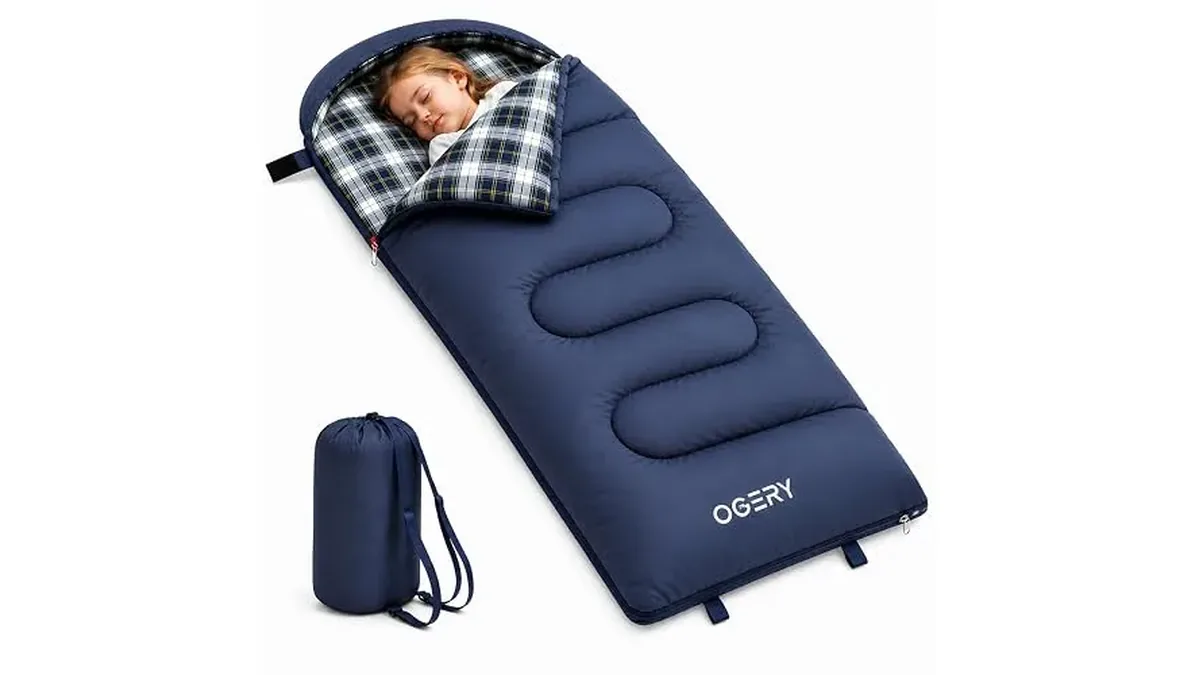
The Kids 3-Season Sleeping Bag is built for more than a single campout. OGERY describes it as a machine-washable bag that is made to keep its shape and softness through repeated washes, with a stain-resistant outer fabric. That is the brand claim. The steps below add general textile practice for a cotton-flannel lining and hollow-fiber fill, and they yield to the care label sewn on your bag if the two ever differ.
What this bag is made of
This is a three-season kids’ bag for spring through autumn, sized for children up to 4 ft 7 in (140 cm). Inside is a cotton flannel lining over a high-density hollow fiber fill, inside a breathable polyester shell. OGERY says the shell helps kids avoid overheating indoors, which is why the same bag shows up at sleepovers and preschool naptime as well as on mild campouts.
A zipper at the foot can stay closed on a chilly tent night or open so feet can breathe when a bedroom runs warm. The main zippers are two-way and anti-snag, sized for small hands and reinforced so fabric is less likely to catch in the teeth. The bag rolls into an oversized carry bag with adjustable straps. It is not a winter camping bag, and taller kids will outgrow the 4 ft 7 in (140 cm) limit. Sizing and when a kids’ bag makes sense are covered in the kids sleeping bag guide.
On a tent floor, put a pad underneath. OGERY’s Foam Camping Mattress is the slim foam option the product page points to. After a damp night, open the bottom zipper and let the bag air out fully before rolling it into the carry bag.
Before you wash
Check the sewn-in care label first. OGERY states that the whole bag goes in the washing machine, but the label is still the last word on water temperature and cycle names, which the product page does not list.
Then do this prep, which is general practice for any zippered insulated bag:
- Empty pockets and shake out crumbs, sand, and grass.
- Close the main zippers so the sliders do not beat the drum. Open the foot zipper a little if you want rinse water to move through the foot box more easily, as long as the tape cannot snag.
- Loosen any cords and turn the bag so heavy stains face out.
- Pretreat spots on the polyester shell with a small amount of mild detergent. The outer fabric is described as stain-resistant, which helps on fresh marks; dried mud still benefits from a soak on the spot rather than extra detergent in the whole load.
- Wash the bag by itself, or only with other soft items. Do not add shoes, towels full of zippers, or a load of jeans that can twist the shell.
Skip fabric softener and dryer sheets on synthetic-fill bags. That is general hollow-fiber practice, not an OGERY sentence: softeners can coat fill and make it clump. Do not use bleach or dry-cleaning unless the care label allows it.
How to wash it
Use a front-loading machine if you have one, or a top-loader without an agitator. A center agitator can twist a sleeping bag around the post. Choose a gentle cycle and a mild detergent. If the label does not name a temperature, general practice for this mix of polyester shell, cotton flannel lining, and hollow-fiber fill is cool to warm water, not a hot sanitizing cycle.
Let the machine complete an extra rinse if your washer has one. Support the wet bag with both arms as you lift it out. Do not wring it or hang it by one corner while it is soaked. If the carry bag is dirty, wipe it separately unless its own label says it can go in the machine.
How to dry it without clumping the fill
The product page does not publish a dryer setting. General practice for hollow-fiber bags is low heat or air dry, with pauses to break up damp clumps and reshape the bag. High heat can damage a polyester shell and a cotton flannel lining.
If you use a dryer, choose low heat and run shorter cycles, pulling the bag out to fluff the fill by hand and to make sure the foot box and the area behind the lining are not still cool and wet. Adding a couple of clean tennis balls or dryer balls is a common trick to keep synthetic fill from packing into corners; skip anything hard that could hit the zippers. If you line-dry, lay the bag flat or drape it over two parallel lines so the weight is shared. Open the foot zipper so air reaches the bottom.
The bag is dry only when the fill feels light and even, not just when the shell feels dry. A pocket of damp fill left rolled in the carry bag is how odor starts. OGERY already tells you to air the bag fully after a damp night before rolling it away; use the same patience after a wash.
Between washes
Spot-clean the shell when you can, and air the bag after every use. Store it loosely or in the oversized carry bag only after it is dry. Opening the foot zipper is the built-in temperature control on warm nights; more airflow ideas sit in how to stay cool in a tent. Pads that go under the bag are compared in the OGERY sleeping pad comparison. More bags live under sleeping bags, and the wider map is in the OGERY review.
Wash the bag when it is dirty, not on a fixed calendar. Close the zippers, use a gentle cycle with mild detergent, skip softener, and dry the hollow-fiber fill all the way through.